
STATISTICAL ENGINEERING: PROBLEM FORMULATION FOR SUCCESSFUL DATA PROJECTS
Register to watch recording.
Don't start with the data. Start with the problem. Master the art of problem formulation in statistical practice.
Many data science, analytics, and improvement projects fail—not because of poor statistical methods, but because the wrong problem was defined in the first place.
This interactive short course introduces the principles of Statistical Engineering and teaches participants how to frame, structure, and formulate problems that lead to successful data-informed solutions.
 Who Should Attend?
- Experienced statisticians and data scientists who want to enhance project results
- Early-career professionals involved in data-driven decision making
- Graduate students in statistics, data science, analytics, or related disciplines
What You Will Learn
Participants will learn how to:
- Apply the Statistical Engineering problem-solving framework
- Recognize strengths and weaknesses of problem statements
- Formulate clear, actionable, and measurable problem statements
- Avoid common project pitfalls and framing errors
- Develop strategies for tackling large, complex, and unstructured problems
Course Delivery Format
The course is split into two online live sessions
Session 1: September 10 at 10 am - 12 pm EST
Session 2: September 24 at 10 am - 12 pm EST
Each session will utilize interactive learning through:
- Expert instruction
- Individual reflection exercises
- Group discussions
- Real-world case studies
- Practical problem-formulation activities
Meet Your Course Instructors
Roger W. Hoerl

Roger W. Hoerl is Brate-Peschel Professor of Statistics at Union College, in Schenectady, NY. Previously, he led the Applied Statistics Lab at GE Global Research. Dr. Hoerl has been named a Fellow of the American Statistical Association and the American Society for Quality, and has been elected to the International Statistical Institute and International Academy for Quality.
Caleb King
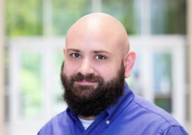
Dr. Caleb King is a senior developer for the DOE & Reliability group at JMP Statistical Discovery LLC. He received his PhD in statistics from Virginia Tech. His research interests included design of experiments and reliability. Prior to joining JMP, he worked as a senior statistician at Sandia National Laboratories. Dr. King currently also serves as Past Chair for ISEA.
Valeria Quevedo

Dr. Quevedo is an Associate Professor and researcher at the University of Piura. She holds a Ph.D. and an M.S. in Statistics from Virginia Tech (USA) and an M.S. in Operations Research from the University of British Columbia (Canada). She has professional experience in research and consulting projects within the fields of statistics and operations research. She is the current Chair of the Board of the International Statistical Engineering Association (ISEA).
Shilpa Gupta

Shilpa Gupta is an award-winning engineering educator and former data science leader whose work focuses on applied AI, statistical engineering education, authentic assessment, and the responsible use of LLM-based tools in engineering curricula. Dr. Gupta is an Adjunct Professor of Industrial and Systems Engineering at San Jose State University. She holds a doctorate in Industrial Engineering from Arizona State University.
Registration
Course Fee: US$30
Includes recording and course materials.
For questions and general inquiry: info@isea-change.org
.png)
